The University Is Not an Island
Palestine, Militant Reels and the Student International
A Film and Study Programme
26–28 November 2026
Cinema RITCS and Cinema Galeries
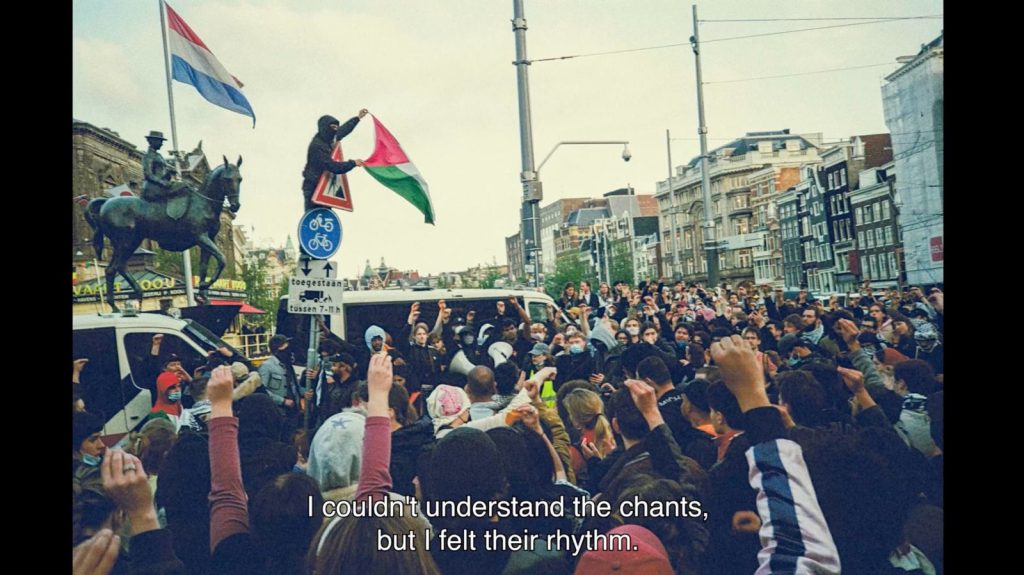
After tents and chants recede, images remain. Moving between classrooms, camps, factories, and occupied campuses, this three-day programme brings together films from the 1950s to the present, tracing how education, student organising and internationalist solidarity have shaped struggles for liberation. Palestine runs through these histories, connecting movements across borders and generations. These images carry memory, preserve unfinished questions and reopen political possibilities at a time when student assemblies gather and streets fill again. As genocide continues in Gaza amid widening global repression and criminalisation, The University Is Not an Island asks what these films remember and what they might set in motion.
THURSDAY 26 NOVEMBER 2026 @RITCS
17:00 – 17:30 · Doors Open
17:30 – 17:45 · Program Introduction
17:45 – 19:30 · Do Not Forget the People of the Tents
Class Outside. A Tale of Complicity and Resilience, Aylin Kuryel, Deniz Buga and Fırat Yücel, Netherlands/Turkey, 2026, 32’
Far from Gaza. Films From the Encampments,Various directors, UK, 2025, 72’
19:30 – 20:30 · Dinner Break
20:30 – 22:00 · Do Not Forget the People of the Tents
Discussion with Firat Yucel, Alina Achenbach and Augustin Denis
Facilitated by Layal Ftouni
Prompts by Moscato Smets and Sirine Famerie
FRIDAY 27 NOVEMBER 2026 @RITCS
9:00 – 9:30 · Doors Open
9:30 – 11:00 · Education is a Field of Struggle
Three R’s in the Sand, UNRWA, 1955, 20’
Perpetual Recurrences, Reem Shilleh, 2016, 57’
11:00 – 11:30 · Break
11:30 – 13:00 · Education is a Field of Struggle
Discussion with Mezna Qato and Reem Shilleh
Facilitated by Sara Abou Ghazal
Prompts by Dunia Daghlas
13:00 – 15:00 · Lunch Break
15:00 – 17:30 · GUPS and the Student International
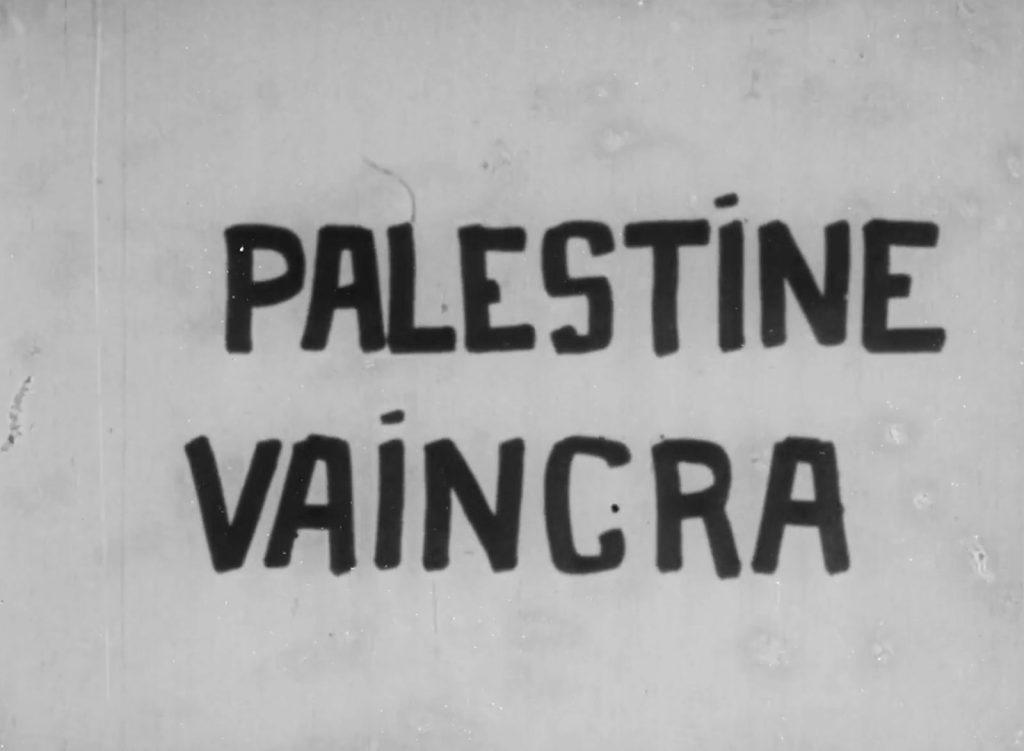
Palestine Vaincra, Jean-Pierre Olivier de Sardan, France, 1969, 28’
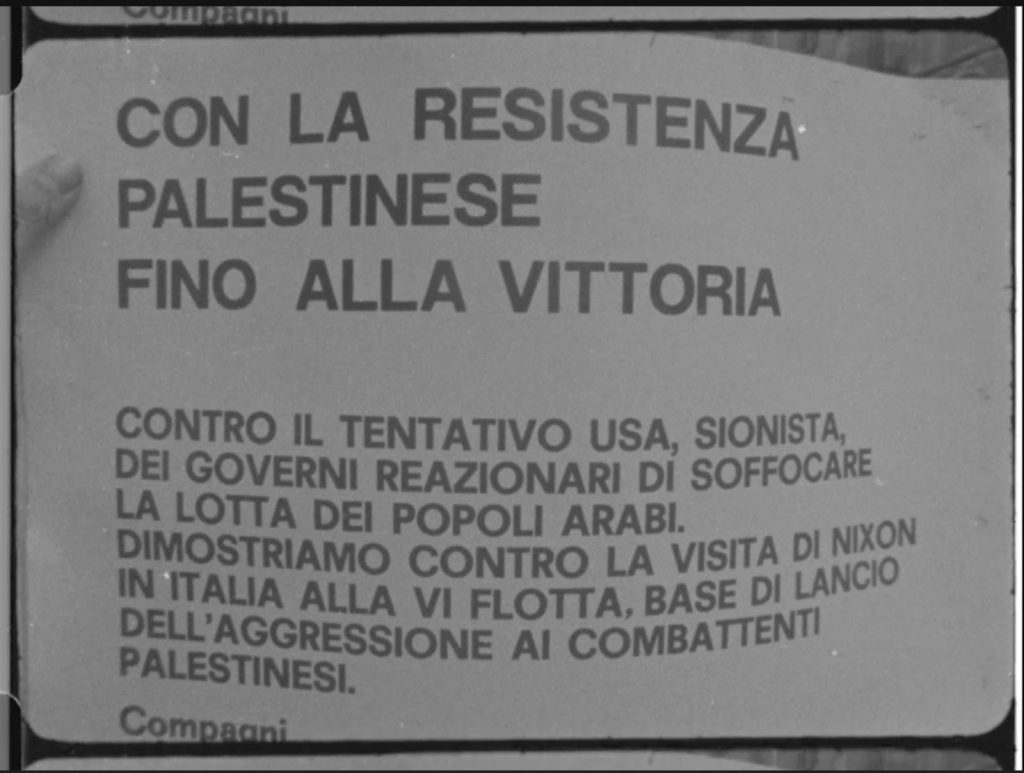
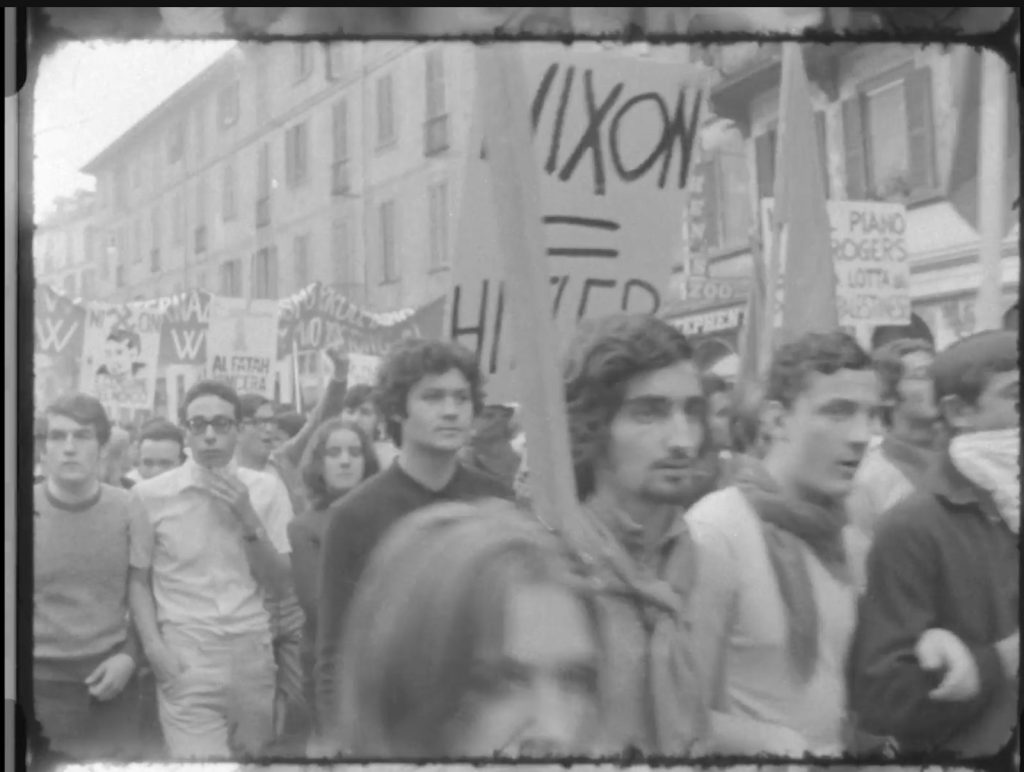
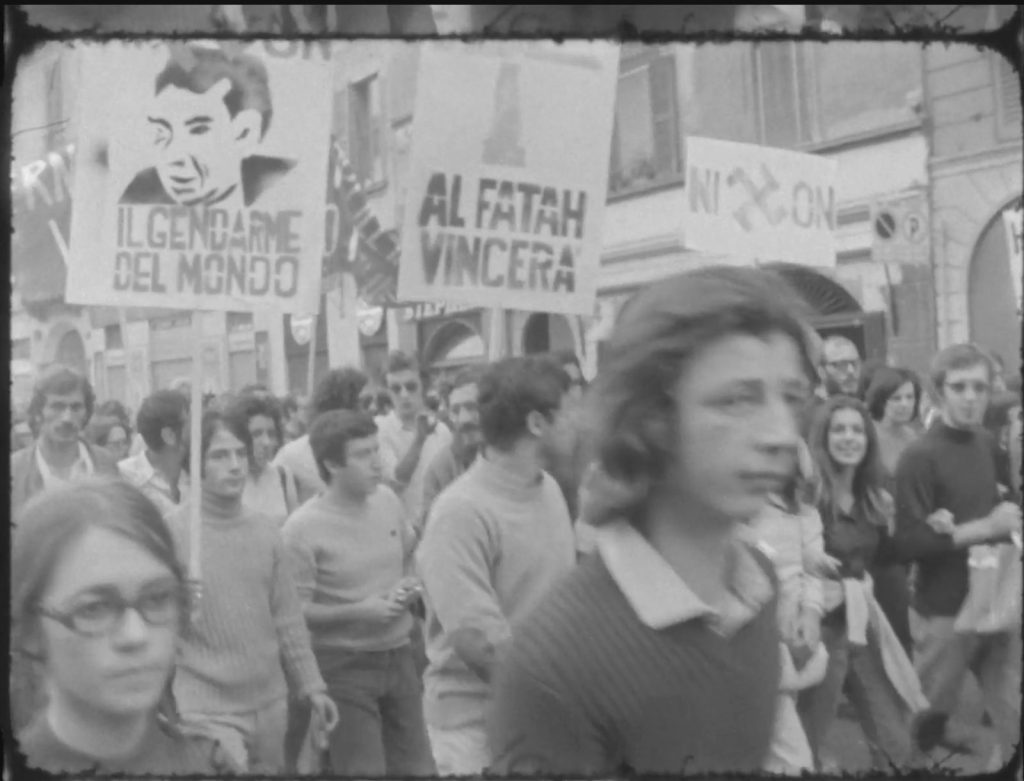
Movimento Studentesco, Milano 1970, UniteleFilm, Italy, 1970, 21’
Morts pour la Palestine, Mamoun Bonni, 1974, 24’
Discussion with Miriam Abu Samra and Bichara Khader
Facilitated by Mezna Qato
Prompts by Alina Achenbach
17:30 – 18:30 · Break
18:30 – 20:30 · Militant Circulations and Revolutionary Publics
Palestine, Another Vietnam, Colectivo de Cine del Tercer Mundo/C3M, Argentina, 1971, 22’
Alors, Jean Chamoun, 1973, 20’
Revolution Until Victory aka We Are the Palestinian People, San Francisco Newsreel, USA, 1973, 45’
Discussion with Anaïs Farine and Saeed Taji Farouky (tbc)
Facilitated by Flora Woudstra
Prompts by Eva Vandenberghe
SATURDAY NOVEMBER 28 @CINEMA GALERIES
9:30 – 10:00 · Doors Open
10:00 – 12:15 · Neutrality Is a Position
Libre examen 68, Chronique de la contestation etudiantine à l’ULB, Luc de Heusch, 1968, 54′
Solidarité sous surveillance, ZIN TV, 2024, 13’
Discussion with Sarah Bahja, Jihane Mhand Yamna and Nathan Delbrassine
Facilitated by Elsa Roland
Prompts by Samier Khaled
12:15 – 14:30 · Break
14:30 – 16:15 · From Classroom to Class Struggle
Compter sur ses propres forces,Atelier pour un Cinéma de Lutte and Yannis Tritsibidas, France, 1972, 52’
Discussion with Abdellali Hajjat and John Nieuwenhuys
Facilitated by Nouria Ouali
Prompts by Kacem Barkani
16:15 – 18:30 · Break
18:30 – 20:45 · After the Encampments
Me Gustan Los Estudiantes,Mario Handler, 1968, 2’52’’
Hymn For Freedom, Jean Chamoun, 1979, 30’
Cells of Illegal Education, Farah Saleh, 2016, 12’
Mehdi Amel in Gaza: On the Colonial Mode of Production, by Tareq Rantisi, Mary Jirmanus Saba, United States, 2024, 14’
Revolution in the Third World. A lecture by Eqbal Ahmad, USA, 1975, 12’
Discussion with Mayssoun Sukarieh, Lena Meari, Mezna Qato and Islam Khatib
Prompts by Maha Abdallah
Facilitated by Omar Jabary Salamanca
The programme is organised by the Arab and Muslim Worlds Observatory (OMAM) in collaboration with United Screens for Palestine, Cinema RITCS, Cinema Galeries, the Palestine Film Institute (PFI) and The Kitchen. It is supported by the Fund for Scientific Research (FNRS), the Institute for Critical Area Studies (ICAS), the Faculty of Philosophy and Social Sciences at the Université libre de Bruxelles, the Study and Research Group on the Contemporary Arab World (GERMAC), and Belgian Universities for Palestine, with selected films courtesy of Third World Newsreel (TWN) and the Archivio Audiovisivo del Movimento Operaio e Democratico (AAMOD).
FILM SYNOPSIS (IN ORDER OF APPEARANCE)
FILM SYNOPSIS (IN ORDER OF APPEARANCE)
Class Outside. A Tale of Complicity and Resilience
Aylin Kuryel, Deniz Buga and Fırat Yücel, Netherlands/Turkey, 2026, 32’
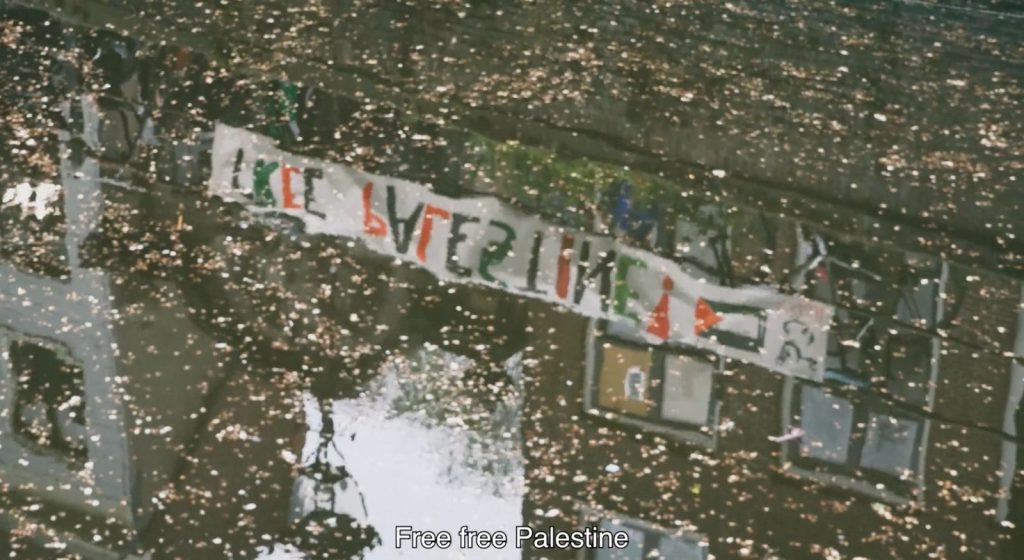
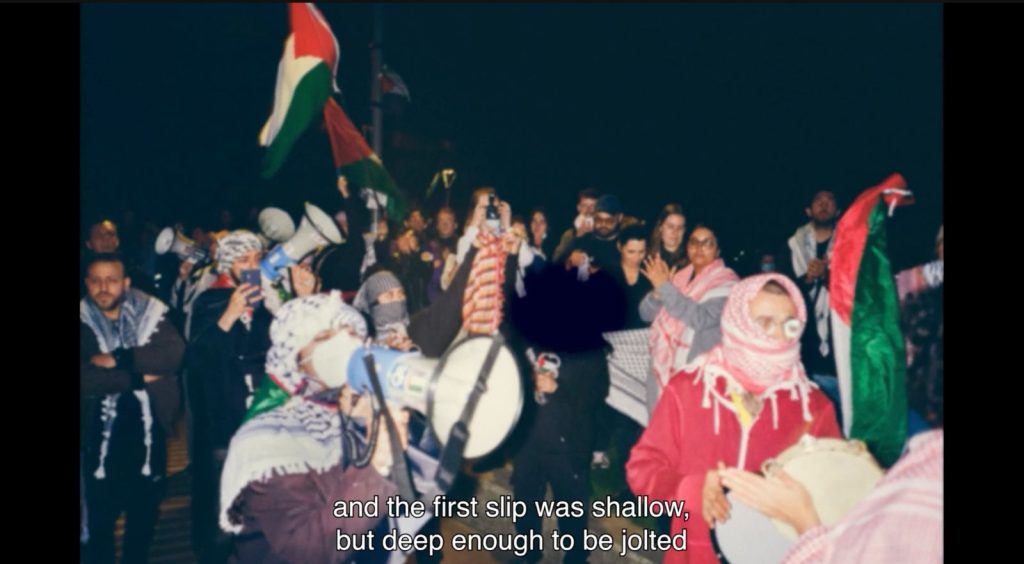
A collective video diary of Amsterdam’s pro-Palestinian encampments, university strikes and anti-genocide protests. Moving through barricades, slogans, dreams and police confrontation, the film asks how struggle transforms both urban space and the production of knowledge.
Far from Gaza. Films From the Encampments
Various directors, UK, 2025, 72’
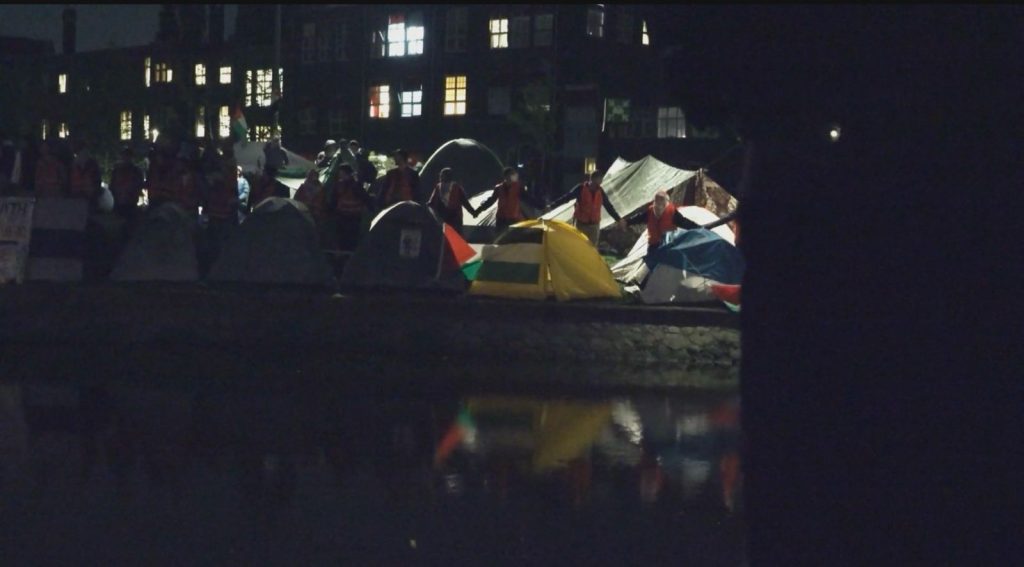
Four short films and a series of interviews reflect on Britain’s student encampments, their forms of co-resistance and their distance from Gaza. Rather than memorialising the camps as uncomplicated victories, the anthology confronts what their images preserve, conceal and leave unfinished.
Three R’s in the Sand
UNRWA, 1955, 20’
Produced by UNRWA, this early documentary follows the construction of refugee camps and the effort to provide Palestinian children with education, from classes held in the sand to vocational training. Its language of humanitarian progress also reveals how schooling became entangled with the administration of prolonged displacement.
Perpetual Recurrences
Reem Shilleh, 2016, 57’
Reem Shilleh assembles recurring scenes from four decades of cinema made in and about Palestine. Classrooms, militants, camps, roads and checkpoints return as visual patterns through which revolutionary memory is produced, transmitted and unsettled.
Palestine Vaincra
Jean-Pierre Olivier de Sardan, France, 1969, 28’
Made in a Paris student residence at the request of GUPS France, this rediscovered film combines testimony, maps, photographs and militant montage to trace Palestinian resistance around the Battle of Karameh. It places Palestine within the wider anti-imperialist struggles of Asia, Africa and Latin America.
Movimento Studentesco, Milano 1970
UniteleFilm, Italy, 1970, 21’
UniteleFilm records a Milan demonstration in support of the Palestinian struggle and against Richard Nixon’s visit to Italy. Speeches by student leaders and a Fatah representative reveal Palestine entering the political language and public space of Italy’s post-1968 movement.
Morts pour la Palestine
Mamoun Bonni, 1974, 24’
Made at Vincennes amid the assassinations of Palestinian and Arab militants across Europe, Bonni’s film becomes an act of counter-memory. Through testimonies—including a rare appearance by Jean Genet—it traces the violence carried into exile and remembers those killed for making Palestine politically present.
Palestine, Another Vietnam
Colectivo de Cine del Tercer Mundo/C3M, Argentina, 1971, 22’
Filmed in the Middle East by Argentine members of the Third World Film Collective, the film connects Palestinian revolution to a tricontinental anti-imperialist horizon. Moving between the aftermath of 1967, refugee camps, demonstrations and training grounds, it makes cinema at once witness, archive and call to solidarity.
Alors
Jean Chamoun, 1973, 20’
Filmed while Chamoun was a student at Vincennes, Alors follows Lebanese students in France as they confront exile, structural racism, sexism and an education system estranged from their realities. Their reflections turn the university into a site of political questioning: what and for whom do we study, and how might knowledge serve liberation?
Revolution Until Victory aka We Are the Palestinian People
San Francisco Newsreel, USA, 1973, 45’
Filmed in Palestinian camps and resistance bases, the documentary combines historical reconstruction with images of political organisation and guerrilla training. It situates Zionism within British colonialism and Western imperial power while presenting liberation as military, educational and social work.
Libre examen 68, Chronique de la contestation estudiantine à l’ULB
Luc de Heusch, 1968, 54′
Luc de Heusch records the assemblies, occupations and arguments through which May 1968 reached the ULB. Remaining close to the movement as it unfolds, the film captures students confronting academic authority, bourgeois education and the institutional limits of free inquiry.
Solidarité sous surveillance
ZIN TV, 2024, 13’
Made following the occupation of ULB’s Walid Daqqa building, this collective emergency film examines the police summons, digital surveillance and criminalisation directed at Palestine solidarity in Belgium. It asks how dissent is monitored and disciplined once it enters the university.
Compter sur ses propres forces
Atelier pour un Cinéma de Lutte and Yannis Tritsibidas, France, 1972, 52’
A panorama of immigrant workers’ struggles in 1972 France, moving between housing occupations, factory discipline, racism, layoffs and demonstrations following political killings. The film shows solidarity becoming material through shared organisation.
Hymn for Freedom
Jean Chamoun, 1979, 30’
Made for the 1978 World Festival of Youth and Students in Havana, Hymn for Freedom salutes liberation movements across Africa, Asia and Latin America. It carries the Palestinian struggle into a shared internationalist horizon, where distant struggles meet in the conviction that freedom is a collective undertaking.
Me gustan los estudiantes
Mario Handler, Uruguay, 1968, 6’
Against the ceremony of a summit of American presidents, Handler sets Uruguayan students confronting police in the streets of Montevideo. Carried by Violeta Parra’s song, the montage pits official power against bodies in revolt—and makes cinema itself take sides.
Cells of Illegal Education
Farah Saleh, 2016, 12’
Farah Saleh re-enacts and transforms gestures used by Birzeit students when Israeli military rule closed Palestinian schools and universities during the First Intifada. The body becomes an archive of clandestine study, civil disobedience and knowledge carried beyond the classroom.
Mahdi Amel in Gaza: On the Colonial Mode of Production
Mary Jirmanus Saba and Tareq Rantisi, 2024, 14’
Reports by Palestinian journalists living through the genocide meet images of Gaza and the words of Lebanese Marxist thinker Mahdi Amel. The film asks what revolutionary theory can offer amid catastrophe—and what responsibilities images bear when destruction is not a past event but an ongoing condition.
Revolution in the Third World: A Lecture by Eqbal Ahmad
USA, 1975, 57’ (12’ fragment)
Closing a student-organised teach-in at the University of Michigan, Eqbal Ahmad rethinks revolution from the standpoint of those subjected to colonial and imperial power. The filmed lecture becomes a political encounter: an insistence that intellectual work must apprehend reality in order to change it.
PARTICIPANT BIOS (IN ORDER OF APPEARANCE)
PARTICIPANT BIOS (IN ORDER OF APPEARANCE)
Fırat Yücel is a documentary filmmaker, editor and curator based in Amsterdam and Istanbul. His work explores collective filmmaking, exile, surveillance and resistance to censorship. A co-founder of Altyazı cinema magazine, he curates its Free Cinema video series, supporting political filmmakers at risk in Turkey and beyond.
Alina Achenbach is a doctoral researcher in International Relations at the University of Groningen. Her work examines borders, migration and the relationship between knowledge production and violence, alongside her involvement in organising for Palestine within Dutch universities.
Augustin Denis is a filmmaker, Film and Screen Studies researcher, and former Postgraduate President of Cambridge Students’ Union. His work connects political film theory with organising around university complicity and student protest. He directed Looking Back (2025), part of Far from Gaza: Films from the Encampments.
Layal Ftouni is Assistant Professor of Gender Studies and Critical Theory at Utrecht University. Her work brings together Palestine studies, feminist theory and political thought, with particular attention to the reproduction and affirmation of life under settler-colonial violence.
Mezna Qato is a historian of the modern Middle East and a Fellow at Newnham College, University of Cambridge. Her research traces the history of Palestinian education, refugee life, migration and political formation, particularly in the aftermath of the Nakba.
Reem Shilleh is a researcher, curator, editor and artist living between Brussels and Ramallah. Her practice is grounded in a long-term investigation of militant and revolutionary image-making in Palestine, its diaspora and international solidarity networks.
Sara Abou Ghazal is a Palestinian writer and feminist organiser raised in Beirut and currently based in Belgium. She co-founded Sawt al-Niswa and the Knowledge Workshop, developing collective practices of oral history, feminist archiving and intergenerational transmission grounded in Palestine and the region.
Dunia Daghlas is a doctoral researcher at Ghent University’s Department of Conflict and Development Studies. Her work explores Palestinian political thought and organising in Kuwait, drawing on oral history to examine migration, collective memory and the wider histories of Palestinian liberation.
Mjriam Abu Samra is a Palestinian-Italian scholar whose work traces Palestinian student movements, youth politics and transnational organization. Her doctoral research at the University of Oxford reconstructed the history of GUPS as an infrastructure of popular rganization and internationalist struggle.
Bichara Khader is a Palestinian scholar and professor emeritus at UCLouvain, where he founded the Centre for Contemporary Arab World Studies. Engaged in Palestinian intellectual and solidarity networks since the late 1960s, he co-edited Textes de la révolution palestinienne with his brother Naïm and has written extensively on Palestine and Europe’s relations with the Arab world.
Anaïs Farine is a cinema researcher, curator and member of the organising committee of Festival Ciné-Palestine. Her research focuses on collective filmmaking, militant cinema and the histories of Arab film clubs and alternative cinematic networks.
Saeed Taji Farouky is a Palestinian-Egyptian-British filmmaker and radical film educator whose work explores colonialism, exile and the enduring effects of conflict. Co-founder of SAFAR Film Festival, he leads a free alternative film school supporting filmmakers from backgrounds underrepresented in the industry.
Flora Woudstra Hablé is a filmmaker, writer and film programmer, and the coordinator of Cinema RITCS. Her work brings film programming into conversation with political history, collective memory and contemporary cultures of resistance.
Eva Vandenberghe is a doctoral researcher at Ghent University’s Department of Conflict and Development Studies. Her research explores how radical political imagination emerges and endures within activist movements, focusing on living counter-archives and the transmission of collective struggles.
Sarah Bahja is a member of ZIN TV, the Brussels-based collective working at the intersection of popular education, social movements and audiovisual practice. She participated in documenting the surveillance and criminalisation surrounding the Walid Daqqa occupation at ULB.
Jihane Mhand Yamna is a researcher and organiser working on international relations, anticolonial solidarity and the politics of the university. She participated in the ULB mobilisation for Palestine and has co-written on complicity, dissent and protest in Belgian academia.
Nathan Delbrassine is a doctoral researcher in sociology at ULiège and Université Paris Cité, with a background in international law and Oriental languages. His research and organising engage migration, anticolonial solidarity and the repression of Palestine activism in universities.
Elsa Roland is a professor of educational sciences at the University of Namur who also teaches at ULB. Her research examines the history and politics of education, relations of domination within schools and universities, and alternative pedagogies; she has also written on complicity, dissent and Palestine solidarity in the Belgian university.
Samier Khaled is a Palestinian-Belgian medical student and Palestine solidarity organiser at KU Leuven. A spokesperson for the university’s student occupation, he has campaigned for an academic boycott and an end to institutional complicity in the genocide in Gaza.
Abdellali Hajjat is Professor of Sociology at the Université libre de Bruxelles and a member of GERME. His research examines racism, migration, colonial legacies, Islamophobia and the political mobilisation of postcolonial communities in France and Belgium.
John Nieuwenhuys is a historian specialising in Belgian solidarity movements with Palestine from 1948 to 1982. His work examines internationalism, militant media and grassroots mobilisation; he also helped secure the archives of Belgium’s Comité National Palestine for preservation at ULB.
Nouria Ouali is a sociologist at the Université libre de Bruxelles and a member of the METICES research centre. Her work examines how racism, gender and class shape migration, working lives and institutional discrimination, alongside the collective struggles and practices of resistance developed by racialised women in Belgium.
Kacem Barkani is a student representative at the University of Mons and a Palestine solidarity organiser. Active in the university’s student solidarity collective, he campaigns for institutional accountability and an end to university ties with Israeli institutions.
Mayssoun Sukarieh is a reader in the anthropology of development at King’s College London. Her research examines youth, education, knowledge production and social movements in the Arab world, situating them within the political economy of neoliberal development and wider struggles over decolonisation and collective resistance.
Lena Meari is an anthropologist and professor in the Department of Social and Behavioural Sciences and the Institute of Women’s Studies at Birzeit University. Her research examines colonial relations, revolutionary subjectivity, sumud, anticolonial feminism and the politics of knowledge production in Palestine.
Islam al-Khatib is a Palestinian feminist researcher and organiser born and raised in Lebanon. A doctoral researcher at the London School of Economics and former Goldsmiths Students’ Union officer, her work explores anticolonial knowledge production, feminist solidarity, surveillance and militarised technologies.
Maha Abdallah is a Palestinian legal researcher and human rights advocate from Jerusalem, and a doctoral researcher at the University of Antwerp. Her work examines settler colonialism, genocide and international law. She has worked with Palestinian and international human rights organisations, with a particular focus on corporate accountability.